
London to Rochester: A Calm Riverside Day Trip
A surprisingly easy day trip from London to a compact historic town where river, cathedral and High Street sit within minutes of the station.
Why Rochester Works as a Day Trip
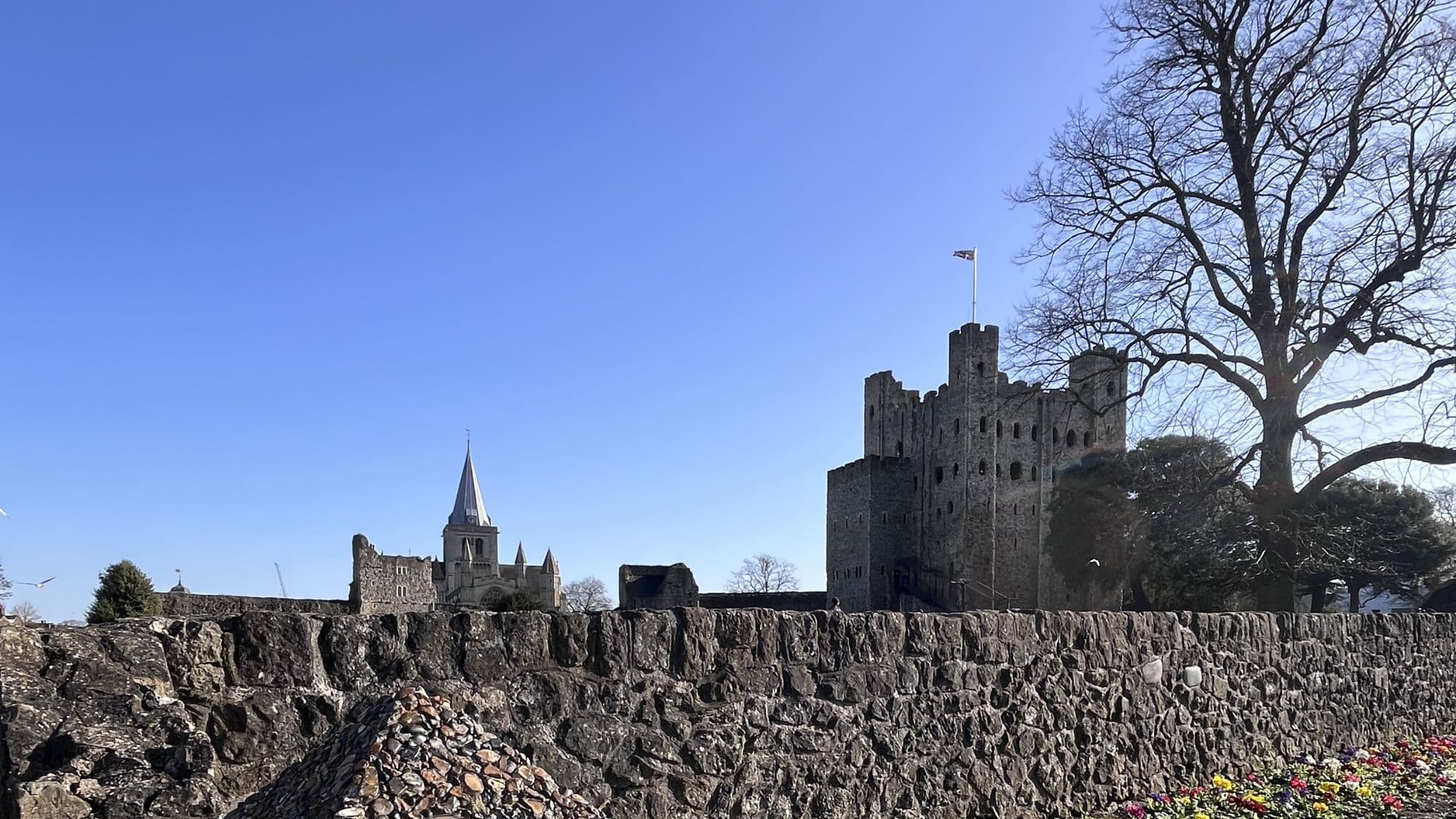
Rochester sits just 35 minutes from London by train, making it one of the easiest day trips from the capital. It works well as a day trip because very little time is lost between arrival and the town itself. The station sits within sight of the river and only a few minutes’ walk from the historic core, so the transition from train to place is unusually short. Within moments you encounter the castle, cathedral and a High Street that still functions as the town’s social spine rather than a preserved façade.
The scale is human. Distances are small enough to walk comfortably, yet the concentration of history and architecture is notably high. You can spend hours moving slowly between streets, green spaces and viewpoints without feeling you have exhausted the place. Rochester rewards a slower pace rather than rushing.
Getting to Rochester from London
Direct trains run frequently from central London, notably from St Pancras International, Stratford International and Victoria. High-speed services reach Rochester in well under an hour, making the journey feel closer to travelling across London than undertaking a traditional excursion.
Ticket prices vary depending on time of day and booking method, but the overall impression is one of ease. The journey requires no changes, no onward transport and no advance planning - you only need to choose the departure time.
From Rochester Station to Historic Town Centre
Leaving Rochester station, the route into town is straightforward. Cross at the traffic lights directly outside, turn right, and follow Corporation Street towards the river. Within minutes you reach Rochester Bridge and the Esplanade, where the first view of the castle and cathedral appear over the roof tops.
This moment feels like the arrival. The shift from traffic and infrastructure to a landscape shaped by centuries of movement, trade and defence. If you fancy cross Rochester Bridge for a special view of the edge of the historic town. From here the town unfolds quickly, with the High Street rising gently away from the river.
What Makes Rochester Feel Different
Rochester is strongly associated with Charles Dickens, whose connections to the town shape festivals, shopfronts and much of its public identity. Yet beyond this literary layer, the historic centre functions as an ordinary town as much as a heritage site. The cathedral, castle and High Street sit alongside schools, homes and everyday businesses, creating a sense that history remains embedded in daily life rather than preserved as a set piece.
Buildings crossing many centuries stand side by side complementing one another, producing an atmosphere that feels continuous rather than reconstructed. Even the busiest areas retain a sense of calm, partly because the town’s compactness limits large-scale crowds and partly because much of what draws people here is reflection rather than spectacular.
How to Spend the Day
The most effective way to understand Rochester is simply walk it. Distances are short, routes interconnect, with many of the town’s most revealing moments occurring away from the main thoroughfares.
Our quiet circular walk through Rochester links the river, residential streets, cathedral precinct, parks and High Street into a single soft loop, allowing you to experience both the celebrated landmarks and the quieter spaces between them. Taken at an unhurried pace, it will take just over an hour, but it will naturally extend for most visitors who pause, take detours and stop for refreshments.
Where to Pause
The town is known for its independent food scene, explored in more detail in our guide to eating in Rochester. Traditional cafés, pubs and long-established eateries are distributed along the High Street and around the cathedral precinct, making it easy to break the day into smaller segments. A coffee at Rochester Coffee Co, a seat at the Cheese Room overlooking the castle grounds, or something more substantial nearby all fit naturally into the rhythm of the town.
Some visitors prefer a proper lunch, while others drift between lighter stops, treating the day as a sequence of pauses rather than a single meal. Outdoor seating in warmer months allows for a sandwich from Lenny’s of Rochester or similar takeaway options, enjoyed with views of historic buildings or open green space rather than indoors.
The River Medway
The River Medway is not merely a backdrop but the organising feature of Rochester. Its width creates open sky, expansive views and light that contrast with the denser streets inland, while the tidal movement introduces a subtle sense of change throughout the day.
Walking along the Esplanade reveals a softer side of the town: families on the grass, joggers following the water’s edge, boats rising and falling with the tide. Returning to the river after exploring the historic streets often feels like stepping back into open space after moving through narrower lanes and enclosed spaces.
Who Rochester Suits
Rochester is particularly appealing to visitors who enjoy places that reward observation rather than activity. History, architecture, food & drink and atmosphere are the primary attractions, not entertainment or retail intensity.
Couples, solo travellers, families and anyone seeking a slower day outside London will find Rochester satisfying. Those expecting large attractions, extensive or shopping districts may find the town is more subdued for their needs. Its strength lies in its historic character and slower pace which contrasts with the lively energy of London.
How Long to Stay
A half-day visit is entirely possible, especially when using the high-speed services, but a full day allows the town’s quieter pleasures to slowly emerge. Time to sit by the river, wander the back streets or return to the High Street later in to the afternoon. Full immersion often proves as valuable as visiting specific landmarks.
Some visitors choose to stay overnight, particularly if combining Rochester with nearby Medway towns, but it functions comfortably as a single-day trip destination.
Leaving & Returning
As evening approaches, the town takes on a softer atmosphere. The castle gardens empty gradually, lights appear along the High Street, and the river begins to mirror the change of light. On clear evenings the sunsets gently over the Medway, with the water reflecting both the fading colour above and the first lights appearing along the riverfront.
This is one of Rochester’s special moments. The openness of the river allows the sky to dominate, while the castle and cathedral shift from architectural detail to silhouette. Boats, moorings and the bridge become dark shapes against the light, and the town feels quieter without ever becoming empty.
Departing at this time can feel less like leaving an attraction and more like stepping away from a self-contained world. The station remains close at hand, and return trains to London run frequently, reinforcing the fact that Rochester is easily accessible. Near enough for spontaneity, yet distinct enough to feel like a genuine change of place.